Showing posts with label London. Show all posts

Wednesday, November 13, 2024

The Booklover's Library

An authentic, tender--at times harrowing--story about how a book-loving British mother and daughter navigate the perils of WWII.

The imprint of WWII on a British mother and daughter are thoughtfully explored in The Booklover’s Library, a deeply moving, meticulously researched novel of historical fiction by Madeline Martin.

Set in England from 1931 to 1946, the story follows Emma Taylor, whose mother died after she was born. Her beloved bookshop-owner father raised her, passing on his passion for books. Eight years after he perishes in a fire that also claimed his store, Emma marries a solicitor who is struck and killed by a car after the birth of their daughter, Olivia.

As WWII looms larger, Emma struggles to find work, as being widowed with a child is construed as an employment liability. When she finally encounters a woman familiar with her father and his bookshop--who is impressed by Emma’s book knowledge--Emma is offered a position at a subscription-style lending library with conditions: Emma must claim she is unmarried--referred to as “Miss Taylor”--and her daughter must be referred to as her “sister.”

As war escalates, a multitude of challenges grow, and Emma is forced, for safety’s sake, to send Olivia away to the English countryside. Separated mother and daughter become entrenched in an uncertain world. But the power of friendship, community, and the comfort of books sustains them.

Martin (The Last Bookshop in London) authentically depicts how the terror of WWII--and the many sacrifices made therein--inspired great resilience of the human spirit.

The Booklover’s Library by Madeline Martin

Hanover Square Press (Harlequin/HarperCollins), $18.99 paperback, 9781335000392, 432 pages

Publication Date: September 10, 2024

To order this book on INDIEBOUND/Bookshop.Org, link HERE


NOTE: This review is a reprint and is being posted with the permission of Shelf Awareness. To read this review as originally published on Shelf Awareness (September 13, 2024), link HERE 


Wednesday, March 15, 2023

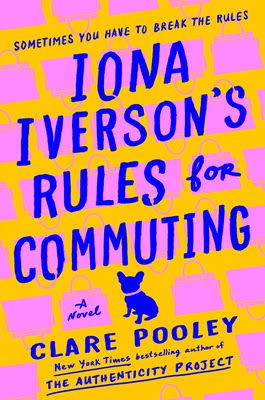
Iona Iverson's Rules for Commuting

An uplifting, immensely entertaining novel about how strangers on a commuter train becomes unlikely friends via a shared near-death experience. 

In the world today, many people tend to live anonymously, in their own personal microcosms. However, in Iona Iverson’s Rules for Commuting, British author Clare Pooley brings people together--strangers--in such a fun, spirited way that it’s bound to spark readers to expand their worldview.


This endearing novel, told from the points of view of an ensemble cast of vividly drawn characters, starts on a London commuter train. At the center of it all is Iona Iverson, a vibrantly quirky, 57-year-old magazine advice therapist--an observant creature of habit with job security issues--who leaves Bea, her significant other, and sets off to work with her beloved French bulldog, Lulu. Every day, Iona and Lulu sit in the same carriage--usually in the “seventh aisle,” seat “number three”--as the train traverses ten stops over 36 minutes from Hampton Court to Waterloo Station. In her mind, Iona assigns clever pet names to the seasoned commuters with whom she daily co-exists, but never speaks to. This includes “Impossibly-Pretty-Bookworm” and “Mr.-Too-Good-to-beTrue.” The other passengers, likewise, do the same—Iona is referred to by one as “Rainbow Lady” and another as “Crazy Dog Woman.”


One fateful day, a man who doesn’t normally ride the 8:06 a.m. train--whom Iona bills as a “Smart-But-Sexist-Manspreader,” who talks too loudly on his mobile phone and refers to his wife as “the ball and chain”--boards Iona’s carriage. He dresses exquisitely but has his look “ruined” because he displays an “extraordinary sense of entitlement which only really comes with being white, male, heterosexual and excessively solvent.” When he starts choking on a grape from his fruit salad, the normal, everyday order of the commute is upended. A medically capable oncology nurse, Sanjay--who has the hots for the “Impossibly-Pretty-Bookworm” but lacks romantic confidence--performs the Heimlich maneuver on the “Manspreader.” Sanjay’s heroic, life-saving act serves as a catalyst that suddenly transforms the travelers from strangers into friends. Over the course of the story, the soul-filled truth of each person connected to the near-death experience is revealed. The stereotyping of appearances can be very deceiving.


As in her previous novel, The Authenticity Project, Pooley’s grasp on the constraints and longings of the human condition proves immensely entertaining. Readers will be charmed by this uplifting, hopeful story rife with tender insights. Traveling with Iona Iverson is a literary journey well worth taking.


Iona Iverson’s Rules for Commuting: A Novel by Clare Pooley

Pamela Dorman Books (Penguin Books), $27.00 hardcover, 352 pages, 9781984878649

Publishing Date: June 7, 2022

To order this book on INDIEBOUND link HERE


NOTE: To read this review as published on Shelf Awareness for the Book Trade (April 14, 2022 ), link HERE


NOTE: To read a condensed version of this review on Shelf Awareness: Reader's Edition (June 6, 2022), link HERE


Tuesday, July 31, 2018

The Lido

A community rallies to save a South London pool facing closure, and a friendship is sparked between an 86-year-old resident and a 20-something rookie reporter.

A public, outdoor swimming pool in Brixton, a small enclave of south London, forms the bedrock of The Lido, a feel-good first novel by British author Libby Page. The tight-knit community is changing. The local library has closed and has since been transformed into a bar. A Starbucks and a TJ Maxx chain store have moved in. And the public pool--the lido--in Brockwell Park, is being threatened with closure by a powerful, local land developer who wants to buy the property.

Rosemary Peterson, who has spent all 86 years of her life in Brixton, hates to see her beloved lido close. She worked in the town library before lack of funds shut it down, and she regrets not having done more to save it. While much has changed over the years in Brixton, the lido has served as a unifying, reassuring constant in Rosemary's changeable life. As a result, she feels powerless when she learns that the pool will close, until loner Kate Matthews--a shy, insecure reporter in her mid-20s, new to Brixton and the local paper--interviews her for a story. The two women are worlds and generations apart. However, as Rosemary regales Kate with stories about the lido and what it has meant to her--and to the history of the town--a bond of friendship grows between them, transforming both of their lives.

Page assembles a lively, diverse cast and heartwarming remembrances about the pool and how it sustained and enriched the town over time. Readers diving into this hopeful, tender story can emerge refreshed by the meaningful depths of community and the bonds of indelible friendships.


Simon and Schuster, $25.00 Hardcover,  9781501182037, 330  pages

Publication Date: February 7, 2017

To order this book on INDIEBOUND, link HERE


NOTE: This review is a reprint and is being posted with the permission of Shelf Awareness. To read this review on Shelf Awareness: Reader's Edition (July 24, 2018), link HERE

This review was originally published (in a longer form) on Shelf Awareness for The Book Trade (June 14, 2018). To read this review on Shelf Awareness for the Book Trade, link HERE

Tuesday, June 5, 2018

How to Stop Time


A middle-aged-looking 439-year-old man is forced to reconcile the adventurous experiences of his very long life. 

Tom Hazard appears to be a vibrant and wise 41-year-old, but he's actually lived for 439 years. Ancient Tom suffers from anageria, a rare condition that develops in puberty, where the physical aging process slows down--he ages only one year for every 13 or 14.

Tom was born in 1581, in France, where his mother was accused of witchery and came to a tragic end, forcing orphaned Tom to flee to England in 1599. There he was befriended by a young woman named Rose and fell in love. The secrecy of Tom's rare condition, however--and his fear of meeting a fate similar to his mother's--sadly cuts their relationship short.

Throughout a braided timeline that spans centuries, Tom is aided by an underground society of anageria sufferers--albas, short for albatrosses--who protect each other and carefully guard the secret of their long lives. He shares adventures with notable historical figures such as William Shakespeare, Captain Cook and F. Scott Fitzgerald. Through it all, however, Rose remains his cherished true love. When he returns to London in the present day, to teach history in the same neighborhood where he once lived with Rose, he is forced finally to reconcile his place in the world--past, present and future.

The lively creativity of
Matt Haig (The Humans) continues to delight and enchant readers. In How to Stop Time, he offers a well-drawn cast of vivid characters embroiled in an inventive, fast-paced story that successfully blends fantasy, romance, comedy and adventure.

How to Stop Time: A Novel by Matt Haig

Viking Books, $26.00 Hardcover,  9780525522874, 336  pages

Publication Date: February 6, 2017

To order this book on INDIEBOUND, link HERE


NOTE: This review is a reprint and is being posted with the permission of Shelf Awareness. To read this review on Shelf Awareness: Reader's Edition (February 23, 2018), link HERE


Friday, May 19, 2017

Miss You

Two Brits keep missing each other--and their chance for true and lasting love--over the course of 16 years.
Two young Brits repeatedly meet by chance but chronically fail to connect in Kate Eberlen's captivating first novel, Miss You. Their circuitous journey starts in summer 1997, when Tess and her best friend are traveling after high school graduation. In Florence, they cross paths with Gus, also a recent high school grad, who is traveling with his parents after the tragic death of his brother, the favorite son. A simple search for gelato first brings Tess and Gus together, but their encounter is fleeting because he feels inhibited in the presence of his parents. They return separately to London, and Gus heads to university to study medicine. Meanwhile, Tess defers academia because her mother dies after a battle with cancer; Tess must assume the care of her five-year-old sister, Hope, who has Asperger syndrome. 
What ensues is a compelling story--told in alternating points-of-view--about the sense of responsibility and guilt inflicted upon both. Miss You maps Gus and Tess's crisscrossing journeys over 16 years. They briefly meet again at London coffee shops, a Rolling Stones concert in Glastonbury and when Gus's children get temporary tattoos at the salon Tess manages. Detours, distractions, sacrifices and bad choices lead to life-changing betrayals by friends and lovers. This episodic, detail-rich narrative breeds suspense as readers grow eager to learn if fate will ever allow these two lost souls--who often feel trapped by the elusive nature of love and happiness--finally to find each other.  
Harper, $25.99 Hardcover, 9780062460226, 448 pages
Publication Date: April 4, 2017
To order this book on INDIEBOUND, link HERE

NOTE: This review is a reprint and is being posted with the permission of Shelf Awareness. To read this review on Shelf Awareness: Reader's Edition (April 28, 2017), link HERE


Sunday, January 18, 2015

The Girl on the Train


Rachel is a "soon-to-be-homeless alcoholic" who exists on the periphery of life since her divorce. She pines for and stalks Tom, who lives with his new family in the house he and Rachel used to share. Every day, Rachel rides a train past her old neighborhood, snatching a momentary glimpse into other lives. From this vantage point, she fixates on one couple she often sees, idolizing them: "They're what I lost, they're everything I want to be."

One day, as the train passes the house, Rachel spies the woman kissing a strange man in her backyard. This discovery shatters Rachel's illusions about the "happy" couple, so she binge drinks to the point of blacking out. The following day, when the news reports the woman is missing, Rachel vaguely recalls having exited the train in her old neighborhood that night and subsequently convinces herself that she may be involved. Unfortunately, Rachel can't remember much else--including where and how she received cuts on her hand. Determined to reconstruct the night in question and solve the mystery, she soon becomes entangled in the police investigation.

Paula Hawkins fashions The Girl on the Train from a staggered timeline and three female narrators. Rachel is the anchor, though she's not always understandable or trustworthy; Hawkins fills in the missing pieces via flashbacks and passages narrated by the missing woman and Rachel's ex's new wife. En route to a terrorizing, twisted conclusion, all three women--and the men with whom they share their lives--are forced to dismantle their delusions about others and themselves, their choices and their respective relationships.

The Girl on the Train by Paula Hawkins
Riverhead Books, $26.95 Hardcover, 9781594633669, 336 pp
Publication Date: January 13, 2015
To order this book via INDIEBOUND link HERE

Note: This review is a reprint and is being posted (in a slightly different form) with the permission of Shelf Awareness. To read this review on Shelf Awareness: Reader's Edition (1/13/15), click HERE

This review was also featured (in a longer form) on Shelf Awareness: Book Trade (1/5/15). To read the longer review click HERE

Sunday, June 22, 2014

Martha Grimes: Every Book the Last Book

The Writer's Life

Since 1981, fans of the Richard Jury mysteries have come to expect eccentric characters, peculiar murders and a smart, cultured, analytical detective who searches for killers from a cast of disparate suspects. One of the more consistent hallmarks of a Richard Jury novel are the titles derived from clever names of actual pubs and bars, like The Old Fox Deceiv'd and The StargazeyMartha Grimes has largely set the atmospheric series in London and quaint, small-town villages in the English countryside, but a few titles are also set in America--The Horse You Came in On in Baltimore, Md., and Rainbow's End in Santa Fe, N.Mex. Her new Jury novel, Vertigo 42 (see review below), is set in London and environs.
Grimes is a writer of authority and great wit. She continues to reinvent and put refreshing new spins on the traditional mystery form. She has also penned several other books, not all of them mysteries. Her novels Foul Matter and The Way of All Fish offer funny, suspenseful send-ups of the publishing industry.
You are a U.S. born-and-bred writer, yet most of the Jury novels are set in Britain. What is your connection to England?
None, other than I've always liked it.
Do you often travel to England and the British countryside for research?
Not as often as I used to. Perhaps every couple of years now.
You've written 23 books in the Jury series. How and why do you stay engaged in this series and keep it fresh?
Because I like the characters, not simply Richard Jury and Melrose Plant, but all of the characters, including the ones readers appear to hate.
How was Richard Jury's character originally created?
As with all of my characters, Richard Jury simply popped into my mind. So did Melrose Plant. So did all of the others. There's no backstory; there's no searching for names; there's nothing prior. All I knew about the main character was that I wanted a Scotland Yard detective.
Do you have favorite characters from the Jury series? If so, who are they and why do they appeal to you?
Carole-anne Palutski (Jury's neighbor) is one because she's always intruding. She has no respect for Jury's personal "space." This amuses me. I'm especially fond of the kids and the animals. I always enjoy writing scenes with them in it. Mungo (the dog) was a total relief from boredom.
I also really like Harry Johnson because he's more clever, most of the time, than Richard Jury. Jury needs a nemesis.
The names of pubs and bars play a significant role in each Jury novel. Was this a conscious choice from the inception of the series?
Yes. I couldn't imagine better titles.
The name and atmosphere of the champagne bar, Vertigo 42, is a departure from your usual small-time pubs. Why did you make this choice?
Because of the name. How could one resist it?
How did the story of Vertigo 42 germinate?
Stories don't really "germinate" for me. I start writing and keep writing and the story goes on. Vertigo 42 started because, as I said, I was fascinated by the name. That's the way a lot of the books in the series started: because of the name.
Do you carefully plot out your novels in advance of writing them?
I never plot them out. I tried once and couldn't do it. The reason for this is (1) I can't write unless characters are moving and talking in some setting that I can see and hear, and (2) plots bore me. There is a famous writer/editor, whose name escapes me, who was approached by a student who asked him to look at a plot she'd formed for a novel. He said, "There is no plot." I loved that. A plot cannot be foretold separately from the whole story.
You studied at the University of Iowa writing program and concentrated on poetry. How and why did your writing career veer toward mystery novels?
My poetry was complicated by elements of mystery--dark houses, fleeing children, bodies, blood. The book of poetry I published is a British mystery in poetry form, or a satirical treatment of one.
Your memoir, Double, Double--co-written with your son, Ken--deals with your shared struggles with alcoholism. Would fans of the Richard Jury mysteries want to read this book?
I don't know if they'd want to read it because they like Jury. But everyone knows someone who's been touched by alcoholism, so perhaps that would be a reason to read it.
Is there a difference between writing a novel "under the influence" versus being sober?
Yes, "under the influence" is more fun. However, "under the influence" suggests some sort of drunken stupor. I never actually drank when I wrote, but that had to do with my writing schedule more than my being a good little writer. Insofar as the books are concerned, I doubt anyone could tell where the line was drawn.
If readers have not yet experienced a Richard Jury novel (pity the fool!), should they start with the first book (The Man with a Load of Mischief) or can they jump into the series midstream?
There's no need to start at the beginning. I'd suggest The Anodyne because it introduces the Cripps family and features Emily Louise Perk, who serves as a perfect example of Jury's and Melrose Plant's interactions with children. But one could start anywhere in the series, I think.
Do you have a favorite Richard Jury novel?
The Old Wine Shades because it's intelligent. I enjoyed writing about quantum mechanics and, also, it introduces both Harry Johnson and the dog Mungo. How could I ask for more?
You've been writing and publishing books for decades. Does the process get easier or more difficult?
More difficult. Much, much more difficult.
You are an esteemed and lauded "mystery writer." Do you often have the urge to write fiction other than mysteries?
I've written nine novels that are not mysteries--two books in the Andi Oliver series certainly aren't mysteries! How do readers come by this naive idea that any book that contains a mysterious death or a disappearance or something else inexplicable is a "mystery"? If that were the case, even Henry James would be thought to have written several "mysteries." I'm getting tired of the assumption that any book I write must be a mystery.
Throughout the series, Richard Jury has been rather unlucky in love. Do you think he'll ever find a true, lasting soul mate?
I thought he had. But I was wrong. I think he will. I could be wrong again.
Do you foresee a conscious end or conclusion to the Jury series some day?
Robert Frost said, "Make every poem your last poem." Every Jury novel has a note of finality to it, although the only one readers ever paid attention to was the ending of The Blue Last. Every book is the last book, in a very real sense. I have no plans for closing down Richard Jury. But life does. --Kathleen Gerard


Note: This interview is a reprint and is being posted with the permission of Shelf Awareness. To read this Q&A on Shelf Awareness: Maximum Shelf (5/21/14), click HERE


Vertigo 42


New Scotland Yard Superintendent Richard Jury returns to the page with a visit to Vertigo 42, a stylish high-rise champagne bar in London. Jury is meeting friend-of-a-friend Tom Williamson, whose wife, Tess, died 17 years earlier. Her fatal fall down a flight of garden stairs was ruled a result of a misstep, but Tom isn't convinced. He asks Richard Jury if he'll use his connections to investigate.

Five years before Tess's death, she'd hosted a party for some children at her estate; tragically, nine-year-old Hilda Palmer fell into a drained pool on the grounds and died. Could Tess's death been an act of revenge?

For the next seven days, Martha Grimes (The Man with a Load of Mischief) plots the journey of Jury and his dependable sidekick, Sergeant Wiggins. As they travel through the English countryside, they seek out the five surviving party guests (all now adults with secrets of their own), hoping to unearth new insights into Tess's death. Their quest is complicated by two more deaths--in Long Piddleton and Sidbury--that may or may not be related.

With each new discovery and red herring, Grimes leads readers deeper into dark, winding labyrinths of suspicion and doubt. Jury remains an engaging protagonist: smart, witty, sarcastic and wholly unafraid to follow his instincts. As in the other 22 books in the series, Grimes's fondness for classic movies, literature and cleverly named British pubs resurface.  In Vertigo 42, Grimes, a master of the genre, pays homage to Alfred Hitchcock. While some of the identifying descriptions of the large supporting cast are a bit sketchy, Grimes surprising mystery gives just enough information to refresh old fans and whet the appetites of new readers
.

Scribner Books, $26.00 Hardcover, 9781476724027, 326 pp
Publication Date: June 3, 2014
To order this book via INDIEBOUND link HERE

Note: This review is a reprint and is being posted (in a slightly different form) with the permission of Shelf Awareness. To read this review on Shelf Awareness: Reader's Edition (6/3/14), click HERE

To read the full review of this novel as originally published as a special feature of Shelf Awareness: Maximum Shelf (5/21/14)--a much longer and much more comprehensive review--link HERE