Showing posts with label WWII-theme. Show all posts

Wednesday, October 2, 2024

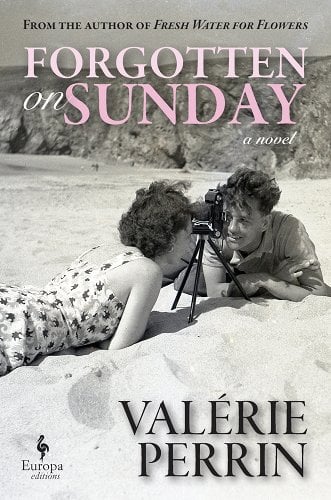
Forgotten on Sunday


An emotionally engrossing novel that exposes the ways losses sustained by two French women, born generations apart, come to define their lives. 

An unlikely friendship is forged between two women, born generations, apart in Forgotten on Sunday, a profound, emotionally complex novel written by Valérie Perrin and translated from the French by Hildegard Serle.


For years, 21-year-old Justine Neige has lived in Milly, a small French village, while happily working as a nursing assistant at the Hydrangeas, the local retirement home. There, Justine is most intrigued by Hélène, an enigmatic, 96-year-old nicknamed “The Beach Lady.” Drawn to Hélène and her stories, Justine willingly collects and record her remembrances in a notebook at the behest of Hélène’s grandson. In doing so, Justine uncovers details of Hélène’s long, fascinating life that include romantic passions; a bistro job where she catered to the poet Baudelaire; and the harrowing atrocities of World War II. These incredibly moving stories of love, loss, and forgiveness awaken Justine’s desires: “I feel nostalgic, nostalgic for what I’ve not yet lived.” These feelings deepen when anonymous, mysterious phone calls are made from the Hydrangeas that falsely notify relatives that their loved ones have died. The contacts have either forgotten or refused to keep in touch with the geriatrics; the calls finally force folks to visit.  As a police investigation ensues, Justine probes the history of her own family—and questions are suddenly raised regarding the long-ago, tragic car, accident that claimed her parents’ lives.


Perrin (Freshwater for Flowers) skillfully juggles the storylines of Justine and Hélène, heightening the drama of each with unexpected revelations. Delicate plot points--infused with elements of historical fiction juxtaposed against contemporary themes--will keep readers, charmed and deeply engrossed. 


Forgotten on a Sunday by Valérie Perrin (translated from the French by Hildegarde Serle)

Europa Editions, $28, hardcover, 304 p., 9798889660187

Publishing Date: June 4, 2024

To order this book on INDIEBOUND/Bookshop.Org, link HERE


NOTE: This review is a reprint and is being posted with the permission of Shelf Awareness. To read this review as originally published on Shelf Awareness (June 14, 2024), link HERE 


To read a longer form of this review as published on Shelf Awareness for the Book Trade (April 4, 2024), link HERE

Sunday, July 6, 2014

The Mill River Recluse

"Sometimes, what you find in a small town can surprise you," writes author Darcie Chan in The Mill River Recluse. The novel centers on Mary Hayes McAllister, a wealthy, disfigured, elderly widow who inhabits a white marble mansion that overlooks the insular town of Mill River, Vermont. Chan describes Mary as "a woman who knew the difference between being alone and being lonely, who wanted so much to be accepted, to have coffee at the bakery, to come face-to-face with someone she didn't know without feeling fearful." Mary's early life was marred by an event which stole her innocence and confidence—and later led to an abusive, heartbreaking marriage. 


The story behind Mary's reclusiveness, which winds back to WWII, unfolds among other Mill River townsfolk who are struggling with their own challenges and demons. This includes an 87 year-old priest, Mary's only friend and confidante; a lustful, power-hungry cop; a widower transplanted from Boston with a young daughter; a teacher battling her waistline; and the town misfit, who practices witchcraft.

Secrets and unexpected gestures of kindness shape Chan's compassionate novel that blends elements of mystery, suspense and romance. After sixty years, Mary's reclusiveness is second nature in town, but behind-the-scenes, she remains attuned to the lives of those around her—"decent, hardworking people, the kind that don't have a lot but would give everything they have to a neighbor in need." Mary humbly leads this initiative, which culminates in a beautifully rendered denouement that rekindles hope for a troubled world. 
Ballantine Books, $15.00 Trade Paper, 9780553391879, 416 pp
Publication Date: June 17, 2014
To order this book via INDIEBOUND link HERE

Note: This review is a reprint and is being posted (in a slightly different form) with the permission of Shelf Awareness. To read this review on Shelf Awareness: Reader's Edition (6/24/14), click HERE


Sunday, August 5, 2012

Jerome Charyn and BACK TO BATAAN

Author Michael Chabon (The Wonder Boys, The Amazing Adventures of Kavalier & Clay) has called him, "one of the most important writers in American Literature."  Newsday has hailed him as "a contemporary American Balzac."  And the LA Times has described him as "absolutely unique among American writers."

Who is he? He's Jerome Charyn, an incredibly prolific, award-winning author who writes across genres and has published 30 novels, three memoirs, eight graphic novels...so far.

His latest undertaking is a novel of historical fiction, BACK TO BATAAN, an eBook (re-issued by Tribute Books) for middle grade readers (Grades 7-9): It's 1943 in New York City. Eleven year-old Jack Dalton is depressed and restless following the death of his father at Bataan (in the Philippines) during World War II.  Jack's mother is trying to keep body and soul together by working in a parachute factory and Jack, tossed aside by his girlfriend and left to his own devices, wants to enlist in the army.  When Jack finally runs away, he falls in with a gang of criminals.  This compact YA novel is filled with action, adventure and suspense.  To learn more, link HERE

Jerome Charyn was kind enough to chat about the book and share some of his ideas about the craft of writing.

Kathleen GerardThanks for joining us, Jerome.  You write across a realm of different genres, what excites you about connecting with different audiences? 
Jerome Charyn:  I’m not so sure that these are different audiences, I think we all love stories, whether we’re children or great-grandfathers and when you move from genre to genre you are still telling a story like Scheherazade and the king is always waiting for the next tale.

KGBACK TO BATAAN is a reissue of a print book, now being offered for the first time as an eBook.  Being a published author for nearly 50 years, what's your impression of digital books? 
JC: I think that this is a kind of logical step as we move from the internet into eBooks. Publishing is changing even as we speak. I think there now will be a more complicated dance between the eBook and the printed book, and as we’ve seen recently, successes in eBooks allow the author to move into print.

KGHow much of your own life is embroiled in BACK TO BATAAN? Did you personally experience New York during World War II?
JCI think so much of the source of my writing comes from my childhood, I grew up during the War - so many of the terrors and the magic of certain films have remained with me.  And all of this appears in the character of Jack.

KGIn reading the story behind this book, I understand that your brother was a detective. Did your experiences with him influence the plot of BACK TO BATAAN?
JCNot really, I think all writing is crime writing. And Back to Bataan is a crime novel with a very original twist.

KGIn the book, why did you decide to include a fascination with famous people - Gary Cooper, Eleanor Roosevelt, etc. - as an underurrent?
JCThese people were heroes to me as a child, particularly Eleanor Roosevelt, who was one of the most extraordinary women who ever lived, and of course as a child I fell in love with Gary Cooper’s face and with his very slow drawl, that seemed so exotic to me.

KGJack, the main character of the novel, finds acclaim through his writing, yet he feels guilty for exploiting the lives of other people on the page. How does a writer bridge this gap?
JCYou’re always cannibalizing other people and writers when you start to write, so it’s natural that Jack should be a young cannibal.

KGThe New York Times plays a significant role in this novel. How important is New York Times in your own life and is there any special reason why you decided to make it a form of connection in the life of Jack, the main character?
JCAs a child, I didn’t even know that the Times existed – I grew up in a neighborhood without newspapers and books, so that when I first fell upon the New York Times, I was very very greedy, and wanted to include it in Jack’s middle-class life.

KGYour writing is so precise, yet evocative - how do you work at crafting your unique style of prose?
JCEverything begins and ends with the word, with the music of the sentence and as Tolstoy once said, “I’m always composing.”

KG: What are your thoughts on the recent explosion and popularity of the YA genre?
JC: I think it might very well be that it started with Harry Potter, that young adult writers are trying to tell good stories and adults have moved into that kind of dream.

KGWhat advice would you give to young people who aspire to a literary career?
JC: It’s not worth the money – only write if you’re absolutely in love with it.

Well, there you have it, thoughts from Jerome Charyn, an acclaimed, dedicated writer who has made significant contributions to the literary community.  Reading Between the Lines thanks him for visiting and wishes him much continued success!  

Back to Bataan by Jerome Charyn
Tribute Books, $2.99, eBook, ASIN #B008DYK6C2, 101 pp
Publication Date: June 21, 2012
To order this book via AMAZON link HERE


Sunday, February 12, 2012

The House at Sea's End

Forensic archeologist and college professor Ruth Galloway is having a hard time juggling the demands of her life, and things only get worse once this single mother returns to work after a maternity leave. When a team studying coastal erosion discovers skeletal remains buried under the cliffs near a historical home on Britain's Norfolk Beach, Galloway lends her expertise to the police and DCI (Detective Chief Inspector) Harry Nelson. Upon investigation, it appears six people might have been killed in one mass grave. Were the deaths accidental or the result of foul play? When the bones are determined to be roughly seventy years old, the investigation turns toward World War II, a time when the Norfolk coastline was patrolled by the Home Guard, a local group ready and prepared for German invasion. But when Nelson and Galloway and their counterparts begin questioning some of the now elderly old-time guards of Norfolk--and those who knew them during wartime--secrets are suddenly unearthed that may incur deadly consequences.

The House at Sea's End is an engaging, contemporary crime novel. This is the third book in the Ruth Galloway mystery series (The Crossing Places, The Janus Stone), and author Elly Griffiths continues to enrich the main forensic investigation with compelling characters embroiled in personal challenges. The reader learns that Ruth's newborn daughter was secretly fathered (in a previous installment) by DCI Harry Nelson, who is married and not intending to leave his wife. Therefore, the scenes involving Ruth, Nelson, the baby--and Nelson's wife--evoke as much suspense as the crime plot. Once again, Griffiths delivers a smart, well-balanced, atmospheric mystery.

Houghton Mifflin Harcourt, $25, Hardcover,9780547506142, 384 pp
Publication Date: January 10, 2012
To order this book via INDIEBOUND link HERE

Please note: This review is a reprint and is being posted with the permission of Shelf Awareness. To read this review on Shelf Awareness: Reader's Edition (1/17/12), click HERE.

Sunday, May 22, 2011

When We Danced On Water

A chance encounter at a coffee bar in Tel Aviv rescues two lost souls from the abyss in Evan Fallenberg's (Light Fell) carefully crafted novel, When We Danced on Water. Teo is a hardened and domineering 85 year-old; an aged, influential choreographer whose life is riddled with sadness and sorrow. Vivi, a 40-something waitress with latent, "interdisciplinary" artistic talent, is completely stalled in her life and her work. The nature of art is what brings these lonely, disillusioned souls together, but it is also what will tear them apart. When their paths cross, a transformation is sparked in each of their lives - but not before they are forced to resurrect the past and face down long-repressed demons. When Vivi and Teo slowly start to form a relationship that seeps beyond the boundaries of artistic friendship, the reader is drawn and captivated by their stories from the past. Teo was a dancer with great promise, who forfeited love to pursue his career, only to have it stolen in wartime by a Nazi brute. While Vivi, an Israeli soldier, forsook her family and the traditions of her Jewish faith for a lover who would later betray her. The novel delves into themes surrounding the perils of passion, evil and regret; the transcendent power of art; and the ultimate healing power of love. The sensitivity that Fallenberg brings to the writing devoted to Teo's life as a dancer in the Danish Royal Ballet, while in the wings and on stage, is passionately evocative - as are the terrifying scenes of his captivity during the war. In the end, it is Teo's story that takes center stage and serves to ratchet up the dramatic tension--past and present--for both Vivi and Teo until the plot unravels into a surprising conclusion of forgiveness and rebirth.

When We Danced On Water by Evan Fallenberg
Harper Perennial, 978-0062033321, trade paperback, 272 pages
Publication Date: May 17, 2011
To order this book via INDIEBOUND link HERE

Please note:  This review is a reprint and is being posted with the permission of Shelf Awareness.  To read this review on their website link HERE